EARLY 90s RUSSIA
THE STORY BEHIND THE PHOTO ARCHIVEEarly 90s Russia is a crowdsourced digital photo gallery of objects from the late Soviet- and early post-Soviet period.
Since Putin came to power in 2000, the official state narrative about the 1990s has been that the decade was a time of trauma and national humiliation for the Russian people. This hegemonic memory culture obscures alternative framings, especially the first post-Soviet years. Memories about 1991-93 as a jubilant cultural renaissance and a spirited time of new opportunities are increasingly exceptional, and fading. Indeed, the generation born after the end of the Soviet Union often know little, if anything, about the decade’s early years as a hopeful, exuberant time when multiple paths may have been open for Russia.
Did you spend time in early 90s Russia? Have you held onto something from that era – a kitschy trinket, book, or object that tells a story, or captures the spirit of that time? Submit your photos via this website to contribute to the archive.
We stand in support of those who oppose Russia’s war against Ukraine.
SUBMIT TO THE PORTFOLIO
Did you spend time in Russia in the early 1990’s?
Have you saved an artifact, souvenir, kitschy trinket, book, or memento that embodies the spirit of that time?
SUBMISSION RULES
Images of objects from Russia, with a description including the date and origin.
First names only.
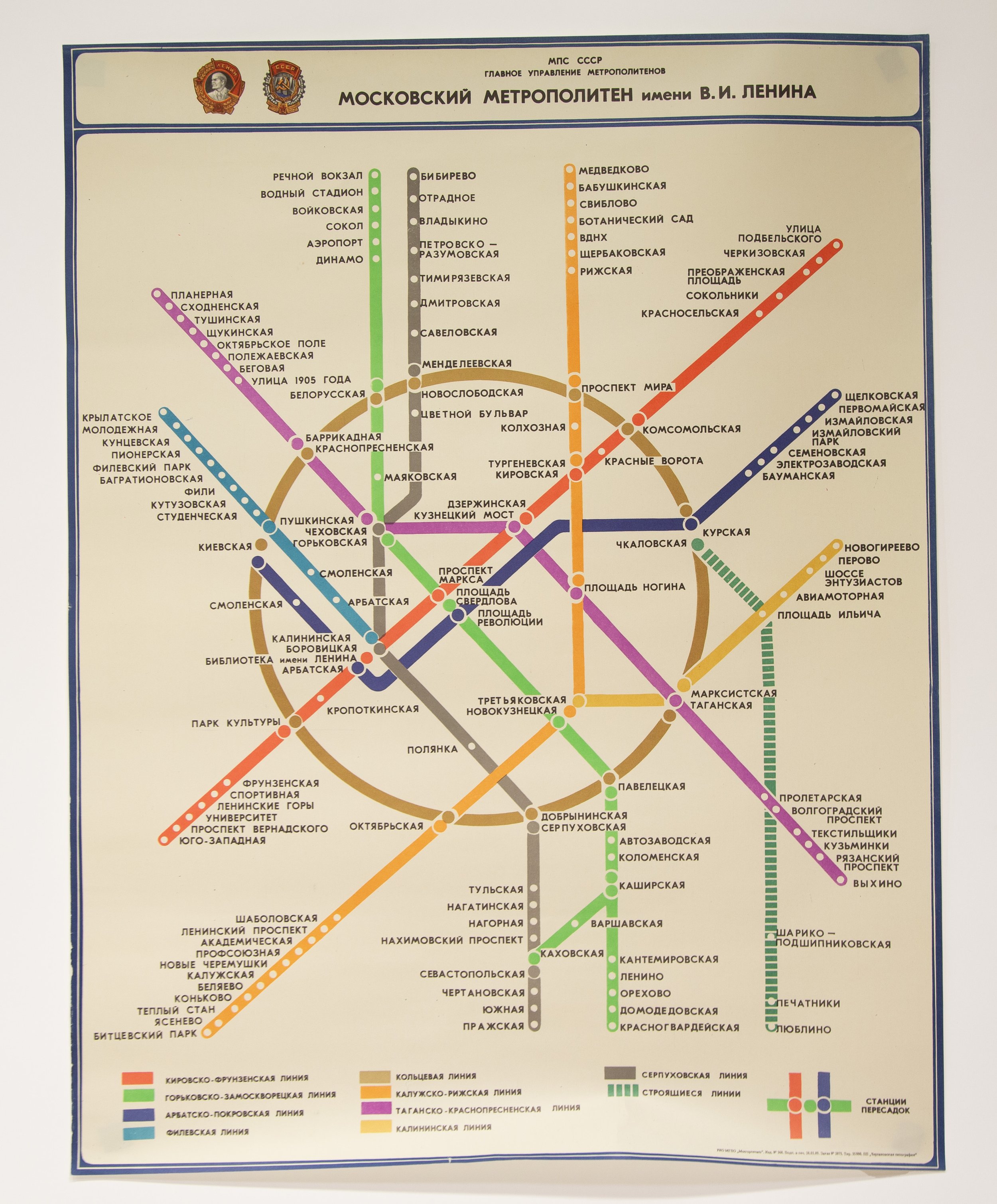
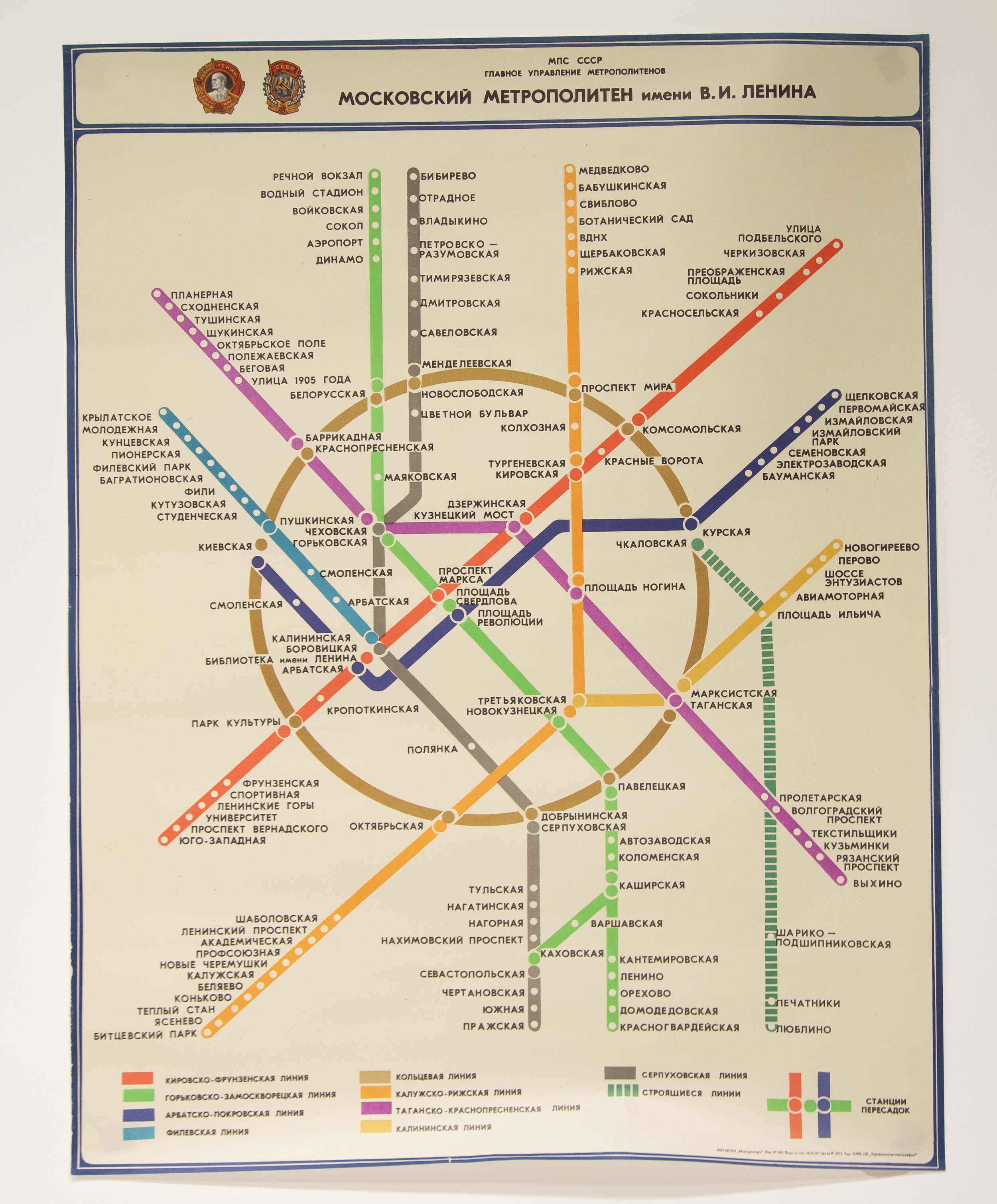
This is a map of Moscow’s metro prior to 1990 station name changes that eliminated certain references to Soviet historical figures and symbols. New station names generally became geographical reference points or reverted to old names. This map was out-of-date by 1991 and sold as a discounted vintage relic at a Moscow stationary store…
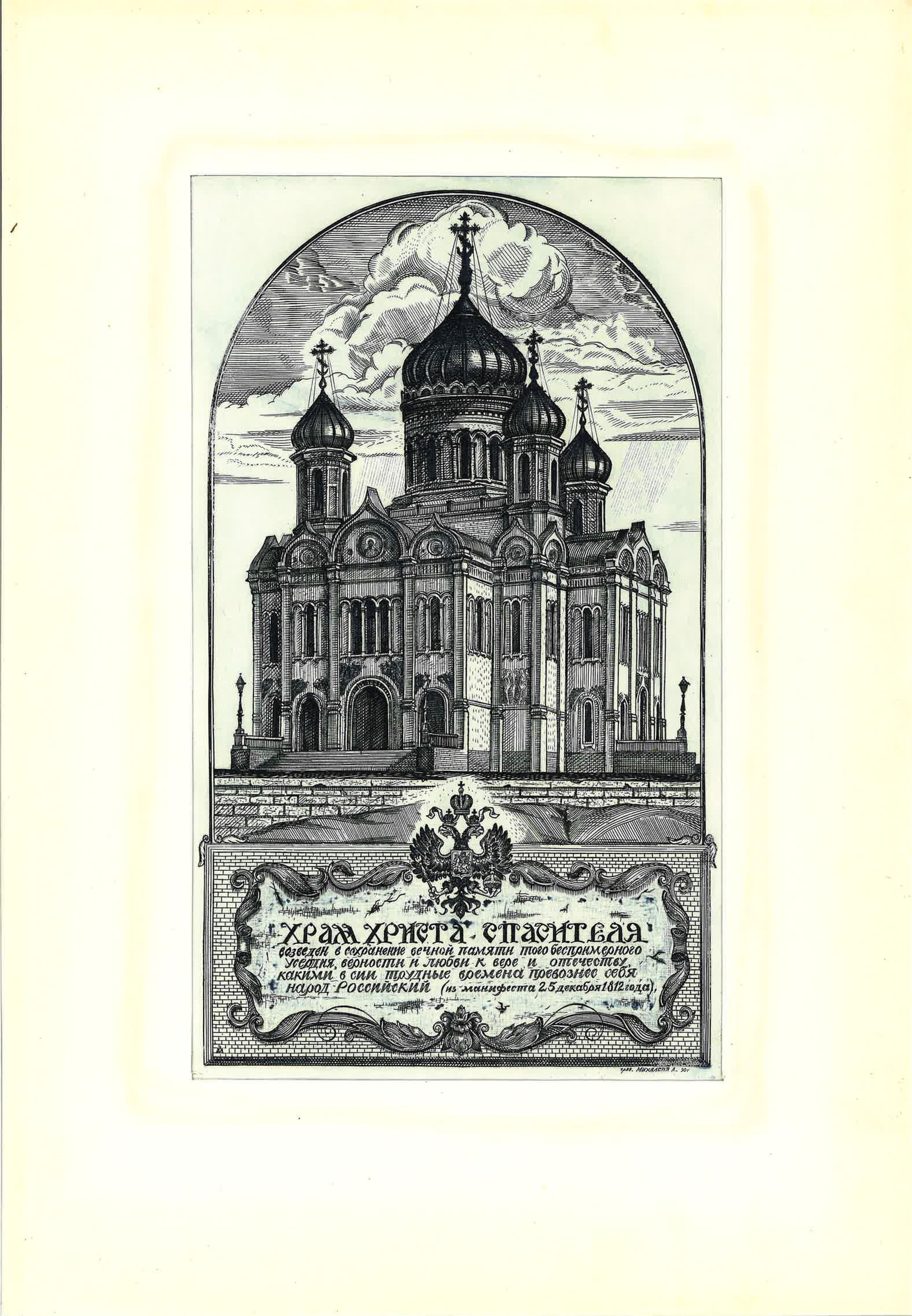
This is an illustration of the Cathedral of Christ the Savior drawn before the cathedral’s reconstruction. The drawing, dated 1990, was a rendering of the yet-to-be-built cathedral, purchased at an outdoor market in Moscow in 1991. At the time the drawing was made, the site was occupied by the Moscow Pool, the world’s largest outdoor heated swimming pool…
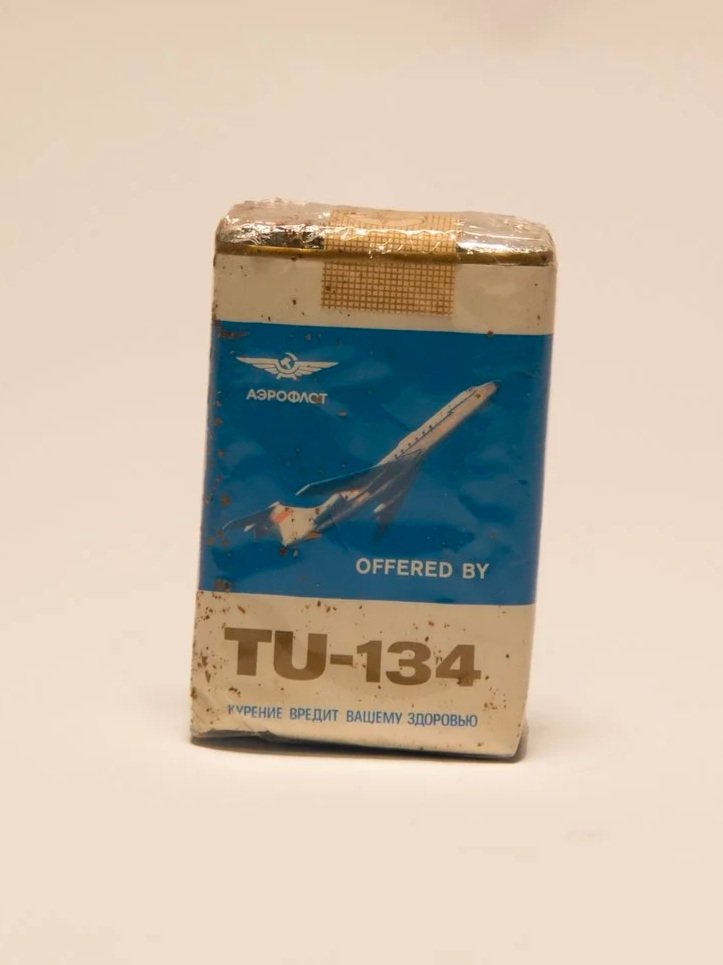
This is a pack of cigarettes available to passengers onboard an Aeroflot flight between Chicago and Moscow in 1992. By any modern barometer, a pack of cigarettes distributed on a commercial airline flight is anachronistic. In the early 1990’s, smoking was still allowed even on US international flights…
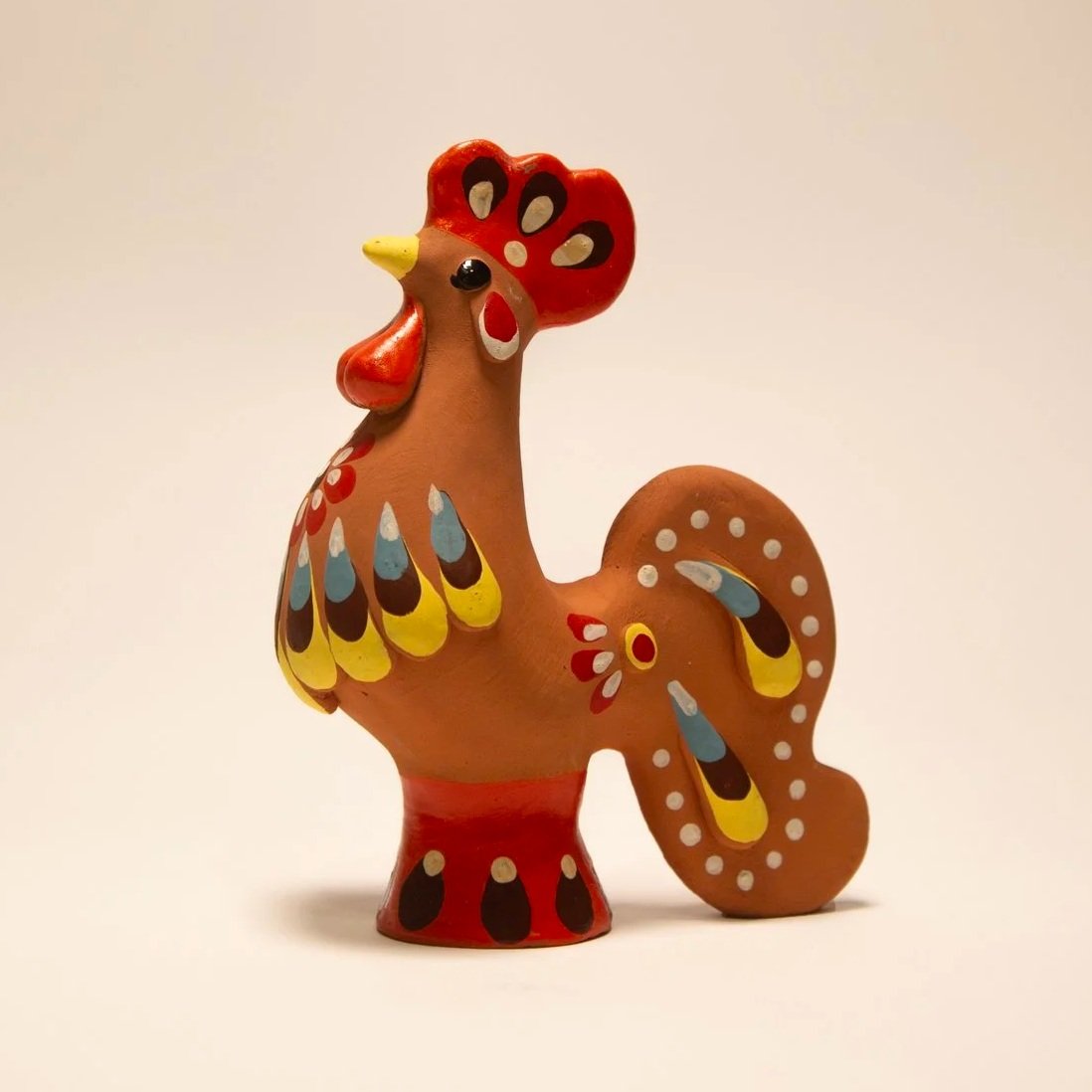
The year 1993 in the Chinese zodiac was the year of the rooster. Each year, representations of that year’s zodiac sign are common sights around Chinese new year. The rooster in numerous forms was omnipresent in Moscow in early 1993. This painted clay figurine is in the style of Dymkovo, originating in the region of Viatka. Some Russian folk arts have flourished, especially ones intended for foreign tourists. This figurine originated in Moscow…
The rooster in numerous forms was everywhere in Moscow at the start of 1993. The year 1993 in the Chinese zodiac was the year of the rooster. Each year, representations of that year’s Chinese zodiac emerge in open-air markets in recognition of the Chinese new year. This blue-and-white ceramic figurine is Gzhel, named for the style's geographical origin…
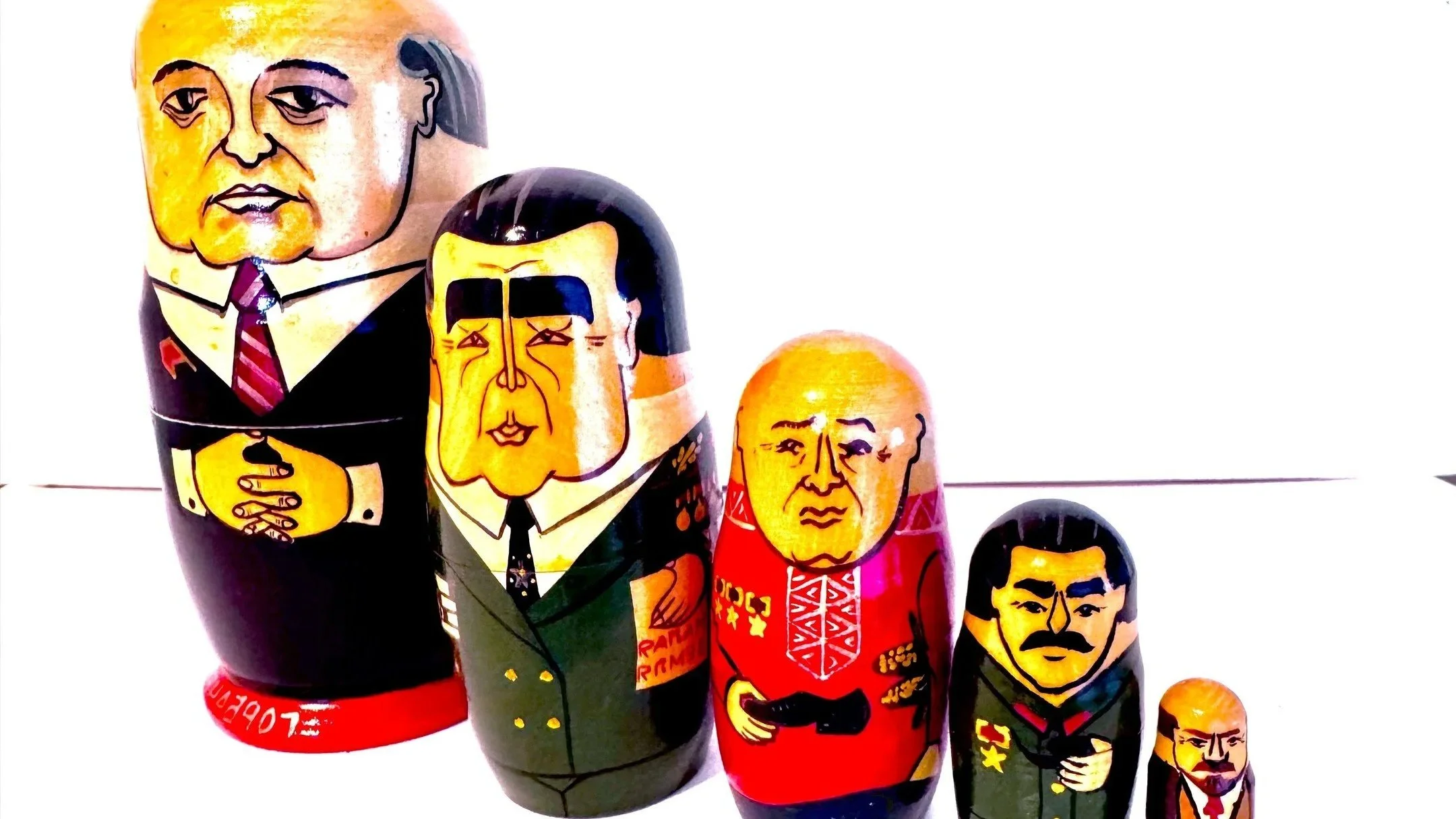
The best-known Russian folk art form is the wooden nesting doll, the matreshka.
In this matreshka set, Mikhail Gorbachev has primacy, and inside is Leonid Brezhnev, Nikita Khrushchev, Stalin, and Lenin. In Brezhnev’s hand is a book, entitled “Malaya Zemlya” (Little Land), which has a three-fold meaning…
Travel opportunities for Russians expanded in the early 1990’s.
By 1991, Soviet citizens would have used this guide for information on how to obtain visas and buy airline tickets to the US (answer: at PAN AM’s Moscow office, Dobryninskaya street, near Oktyabrskaya metro station) (32)…
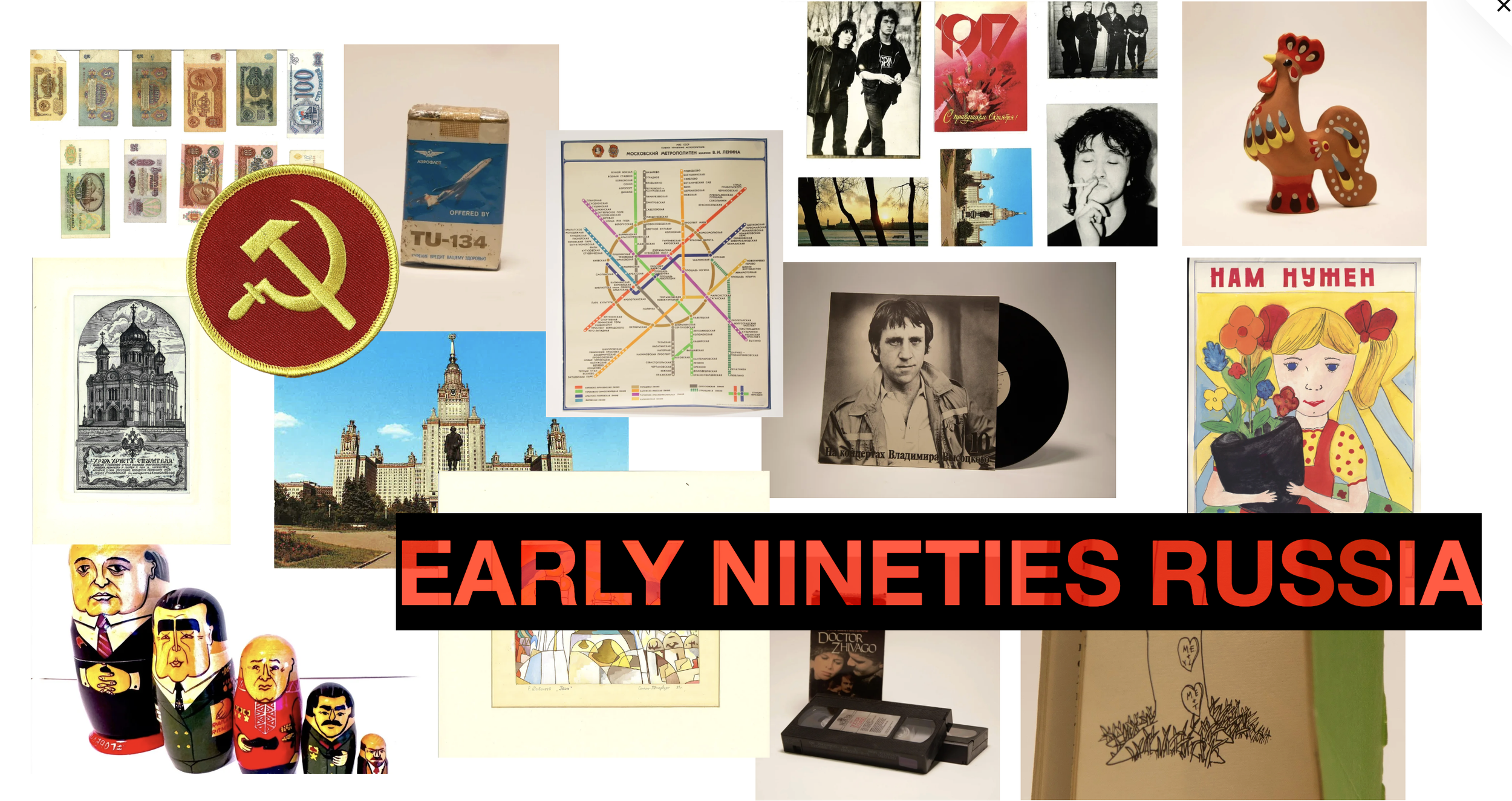
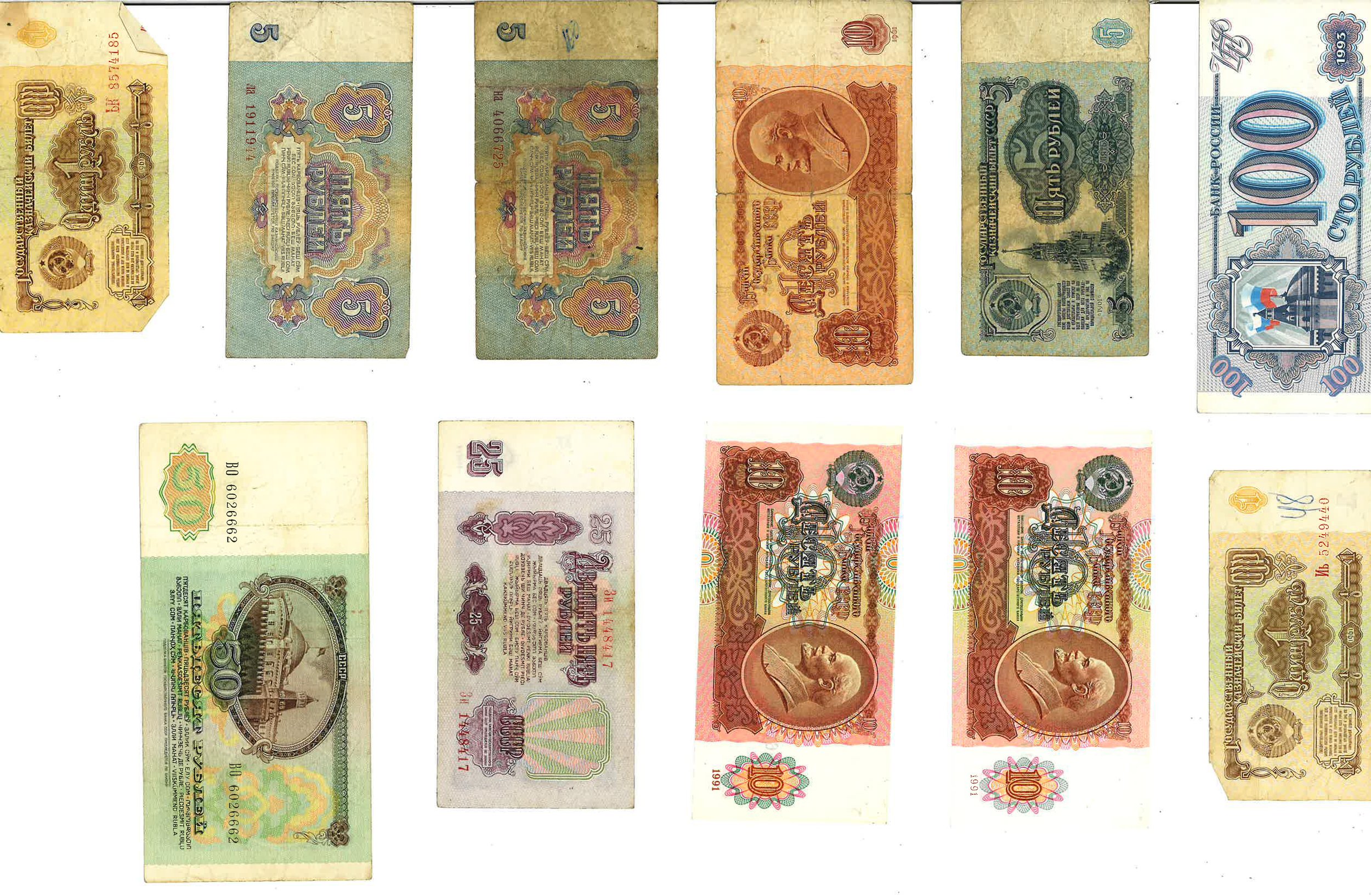
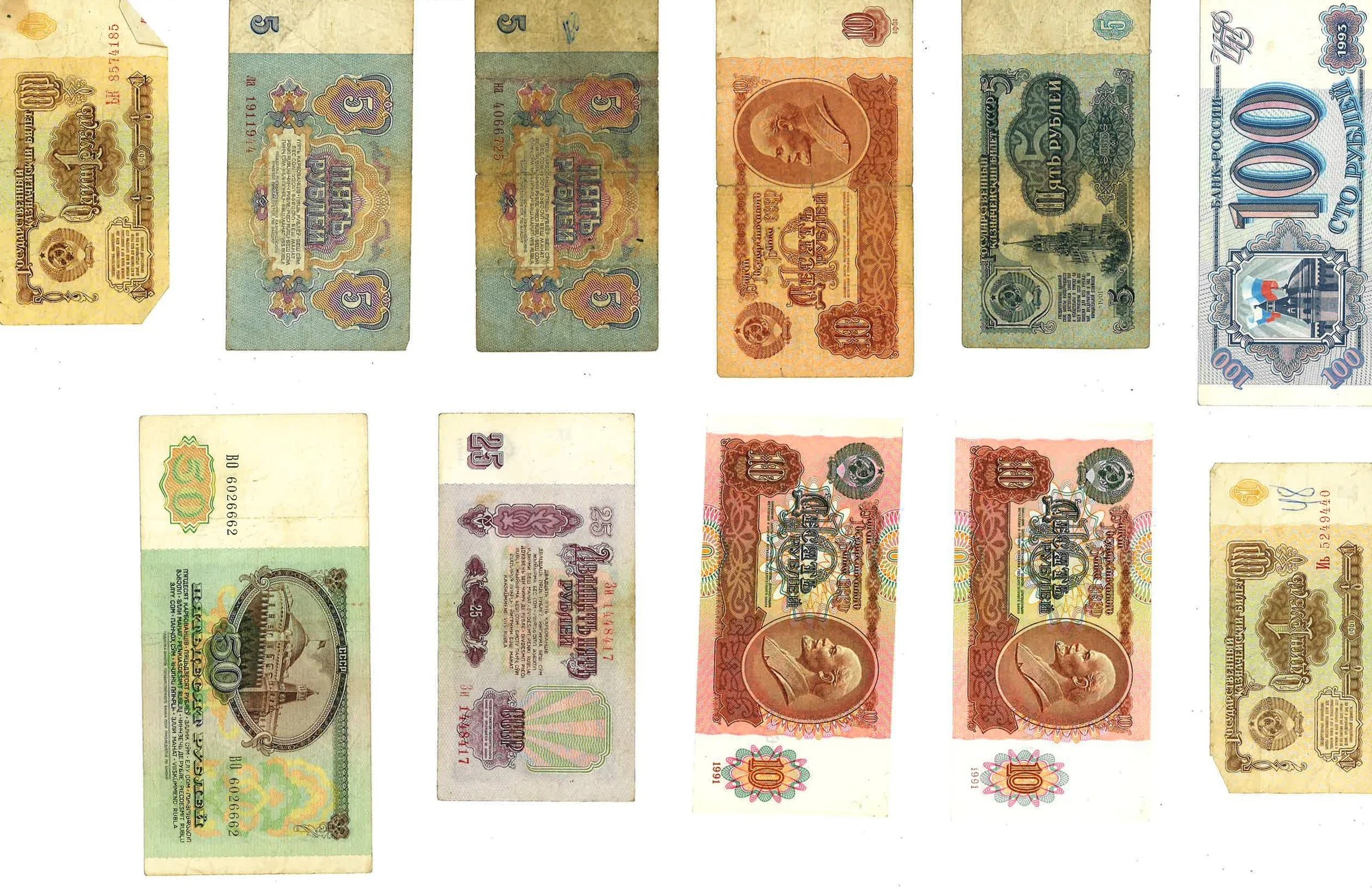
These are examples of paper bills and coins available in 1991-93 in Russia.
Prior to the end of the Soviet Union, the ruble was issued in paper bills denominated in one, three, five, ten, 25, 50, and 100. Kopeks were denominated in one-, two-, three-, five-, ten-, 15-, and 20-coins. In the late Soviet years, the smallest one- and two-kopek coins, needed for public phones, and the 15-kopek coin used in Moscow’s trams, were challenging to find. The kopek was discontinued in the 1990s, then reintroduced in 1998…
In the pre-digital age, this collection of black-and-white and color photos of the 1979-1989 Soviet-Afghan War brought a distant conflict into view of the Russian-language public. The photos include street life in Kabul; local soldiers using Soviet military equipment; hospital wards of wounded; and cemeteries of Soviet casualties…
This is a Russian translation of Every Girl’s Life Guide by Dr. Miriam Stoppard. The popular book was first published in 1987 by Dorling Kindersley, London, and has since been republished multiple times. This is a translation into Russian published in 1991 of the guide’s 1987 edition. Chapters cover menstruation, healthy eating, exercise, hair and skincare, romantic relationships, sex, and birth control…
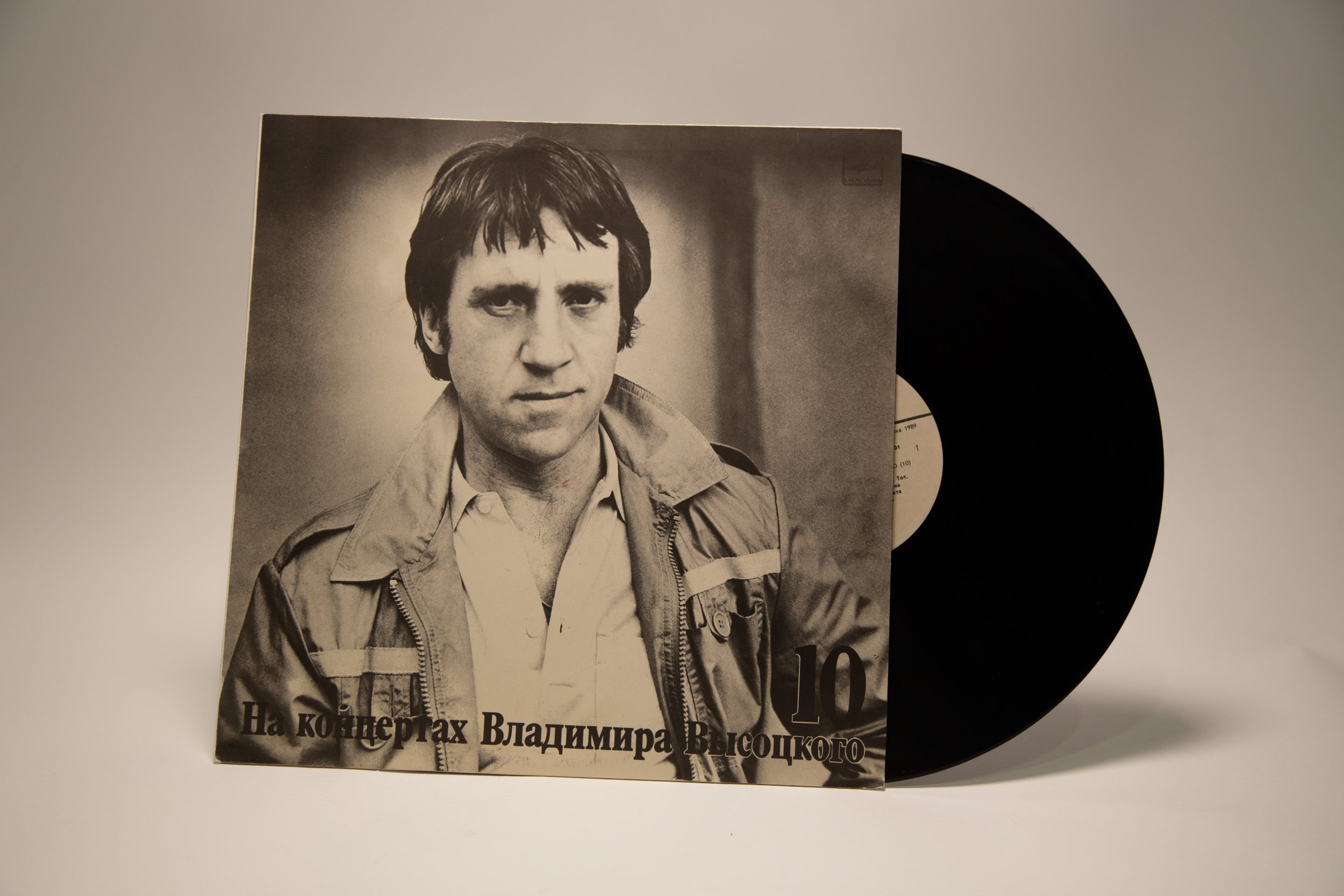
This is a vinyl record purchased at the flagship Melodiya store at the Arbat in Moscow in 1991. In the early 1990s, the days of bootleg cassette recordings of popular Soviet bands like Kino were largely past, and the music had been embraced by the official arts establishment…
This is a vinyl record purchased at the flagship Melodiya store at the Arbat in Moscow in 1991.
Vladimir Vysotsky was a singer and songwriter from the late 1960’s until his untimely death in 1980. For most of his career he performed “semi-official” concerts, with fans circulating his music on homemade cassette tape recordings…
For Russian language learners in the pre-digital age, size was likely equal to quality among factors when considering a Russian-English, English-Russian dictionary. A pocket-sized dictionary, in the absence of smartphones and the internet, became an essential accessory when leaving home. This small edition, published in 1989, includes Soviet-era geographical names, such as Leningrad…
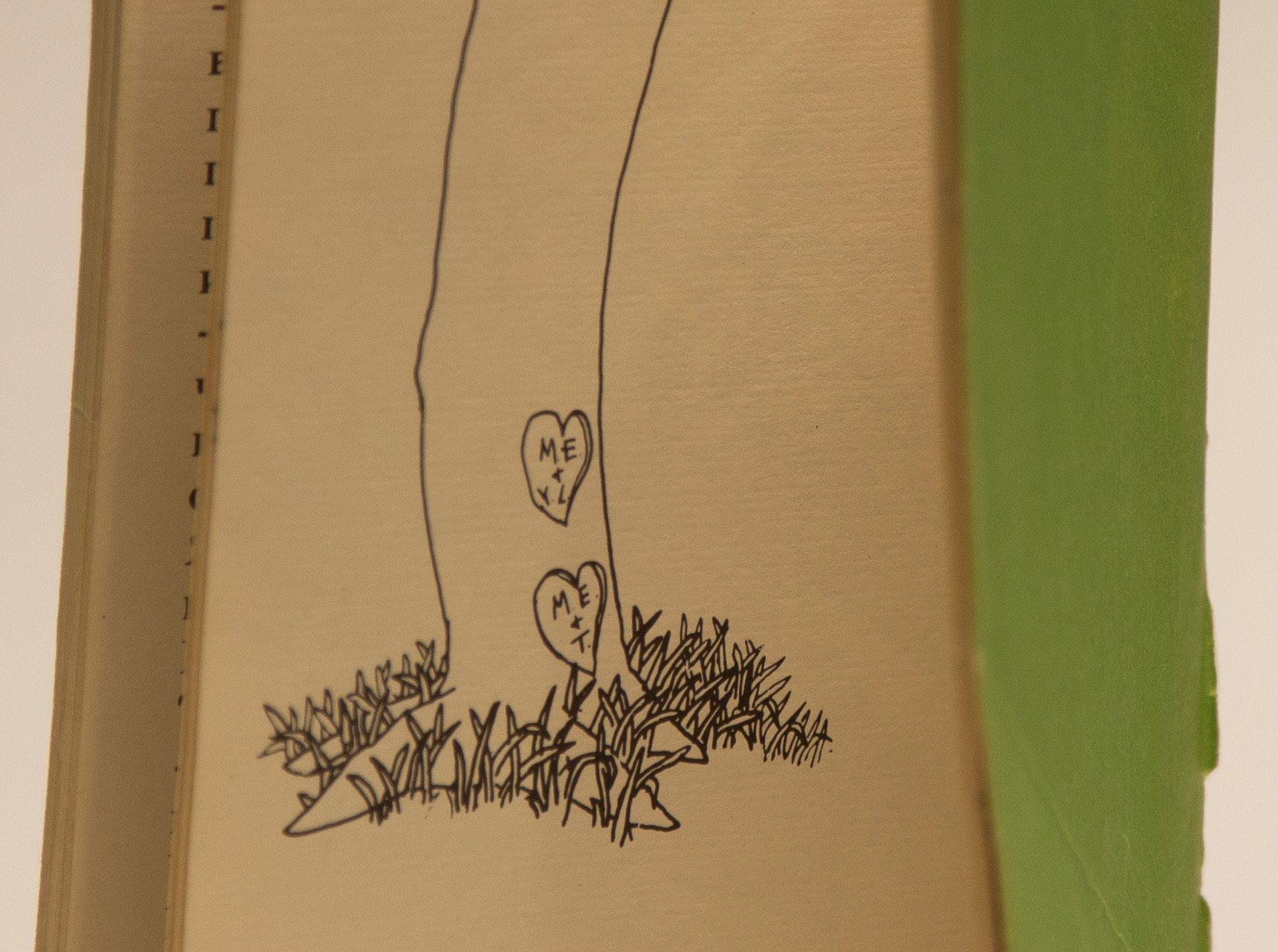
Post-Soviet popular culture was driven by two trends: Westernization and demand for easy-to-consume forms. This thin paperback, a Russian translation of The Giving Tree (Shchedroe derevo) by Shel Silverstein, fits into both categories. The Russian text description in the back cover describes it as a “touching story” that would be “of interest to both children and adults.” The volume includes the Russian translation with illustrations, as well as the original text, to facilitate language-learning…
Daniil Kharms (1905-1942), known in his lifetime as a writer of poems and children’s stories with moderate success, was elevated to a major literary voice after the glasnost period. Beginning in 1960, he was rehabilitated posthumously. In the early 1990’s, as publishers sought to adapt their offerings to market demand for popular, easy-to-read titles, many versions of Kharms’ works were widely available. This version was one of many available for sale at bookstores and open-air markets…
These small paperbacks are dictionaries of slang and jargon of criminals from the mid-1920’s. Both versions were printed in 1990 on uncoated lightweight paper, and have identical content, a word list compiled by S.M. Potanov, with an introduction by him. Only the covers differ. One has a black-and-red design of a guitar, playing cards, and alcohol--accoutrement of the incarcerated, and is shown to have a circulation of 50,000 and sold for five rubles, according to its cover page…
This is a Slava wind-up alarm clock.
The Slava (Glory) brand, of clocks and watches, is linked to the Second Moscow Watch Factory (Второй Московский часовой завод, or 2МЧЗ). The factory opened in 1924. Street clock production began in 1930, then alarm clocks. During World War II, production moved to Chistopol, Tatarstan…
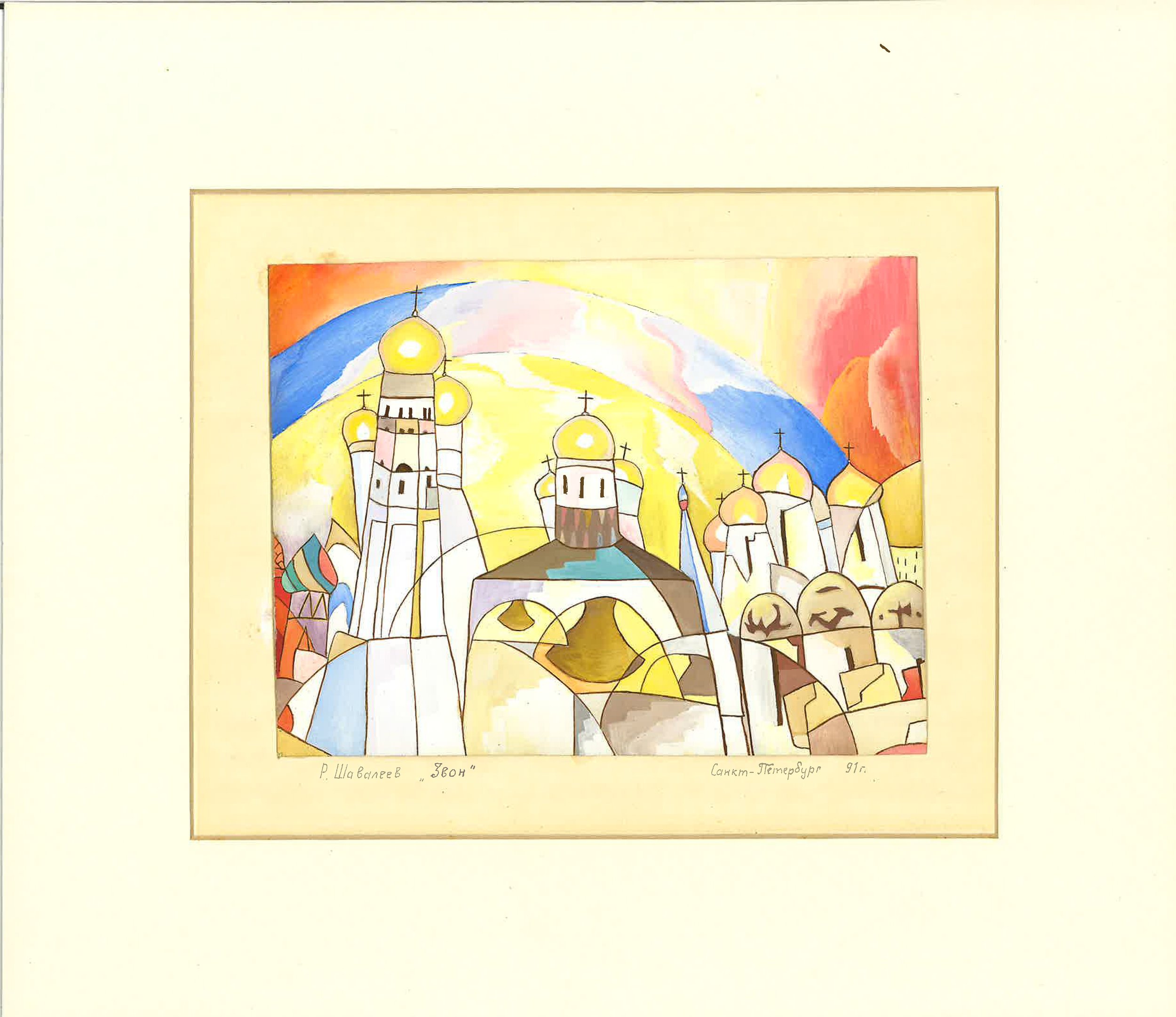
This is an acrylic painting of Orthodox church cupolas in St. Petersburg, entitled “Bell,” by R. Shavaleev, signed St. Petersburg and dated 1991. It was sold at an outdoor street market in Moscow in 1991.
Communism was a “quasi religion” during the Soviet period. After the end of the Soviet Union, a “massive and rapid restoration” occurred of religion’s institutional and social base…
This is a Russian-language Bible that was sold at an outdoor market in Moscow in 1991.
Communism was a “quasi religion” during the Soviet period. After the end of the Soviet Union, a “massive and rapid restoration” occurred of religion’s institutional and social base…
A 16 in. (40 cm) necklace of irregular amber stones purchased in 1993 in St. Petersburg. It is a typical souvenir bought at any tourist area in Russia. It is a prized commodity and luxury product linked to Russia’s Imperial past and symbolic of the reaches of Soviet “empire”…
The glasnost period saw a resurgence in interest in the 1920’s and avant-garde artists of the time. This catalog, published in 1984 in French and translated into Russian in 1991, includes an essay by art historian Andrei Nakov…
This is a compilation of song lyrics by the rock band Akvarium. The small volume was printed on uncoated lightweight paper, with a circulation of 100,000, and includes songs written between 1976 and 1990 across several albums, as well as photos…
This retrospective of film director Andrei Tarkovsky is a hardbound book printed on high-quality coated paper with black-and-white film stills and text by Russian film historian Maya Turovskaya (1924-2019). Turovskaya was a writer and filmmaker in her own right, known for films Pyotr Martynovich i gody bolshoy zhizni (1976), Triumph Over Violence (1965), and Busch singt - Sechs Filme über die erste Hälfte des 20…
This sipping cup is a personalized souvenir from Goryachy Klyuch, a spa town roughly 40 miles (60 km) from the Black Sea coast. The town is known for healing drinking waters and gorges. It is located in Krasnodar Krai, which is connected to Kerch by the bridge that Ukrainian forces destroyed in 2022 to stymie the Russian military that is supplying Russian troops from the occupied Crimean Peninsula…
This is a souvenir of Suzdal, a town located 140 miles (225 km) northeast of Moscow. Suzdal is part of a group of ancient towns known as the Golden Ring, with well-preserved monasteries and churches, developed as a tourist route in the 1960’s. Founded in 1024, Suzdal is sometimes referred to as an open-air “town museum” and paired with neighboring town Vladimir…
This is an exhibition catalog from “Spectacular Posters, 1986-1990” commemorating the inaugural retrospective of placards for theater performances, church events, concerts, cinema, and exhibits. The exhibit was a joint effort between the Soviet Artists’ Union and the Lenin Library…
This is a high quality children’s book covering Russian Imperial history, printed in an old-style typeface with pre-revolutionary script. The book was published in 1992 under an imprint of the state children’s literature publisher, Detskaya Kniga, with a circulation of 100,000…
This is a government-produced illustrated reference book about the Soviet Union, published in 1959 by State Political Literature, with infographics and data about the economy and society. It was given as an ironic gift by a Russian to an American visitor to Moscow in 1991…
Visitors to Russia in the late Soviet years and early 1990s were surprised at vast differences in consumer goods, technology, and standards of living. For many, Soviet everyday reality upended preconceptions about the Soviet Union as a formidable, ominous military power. Store shelves were completely bare in many cases, and clerks used an abacus (счеты) like this one to calculate shoppers’ purchases…
YMCA-Press was an important source of tamizdat, which was forbidden Soviet literature published overseas that was regularly imported to the Soviet Union for domestic readers. Although no longer outlawed in 1991, Solzhenitsyn would not have been readily available by domestic publishers. Thus, attractive YMCA-Press editions were sold openly at street markets in Moscow in the early 1990’s. In addition to Paris, this volume lists Vermont as place of publication, in reference to Solzhenitsyn’s US home…